
How to get your sh*t together in 30 days
Hard life reset!

This post may contain affiliate links, which means I may earn a small commission if you make a purchase (at no extra cost to you).
Sometimes, life feels like it’s running away with you.
You get caught up on the daily hamster wheel—barely pausing for breath.
Your healthy habits go out the window.
You lose all sense of what matters, and why it even mattered to you in the first place.
And it can be so hard to know where to start when you want to get back on track.
I’m just as guilty as anyone else. I talk about intentional living, but I’m not a perfect human being. I slip up sometimes. I get into ruts. I need reminding of the fundamentals too.
When I’m in that space, I tend to lean on convenience foods.
I’ll stick Netflix on at the end of a long day.
Curl up on the sofa rather than drag myself to the gym (and I have a home gym, I literally have no excuse!).
Now don’t get me wrong—I’m not here to suggest all of life’s pleasures are 100% evil. And I’m not saying there aren’t times to listen to your body—to rest, to recover, to slow down when you genuinely need it.
But I think we’re pretty aware when we’re slipping into patterns that aren’t serving us.
When the little daily choices start quietly pulling us further from who we actually want to be.
It’s that slow drift—not one big decision—that usually throws us off course.
Here’s my hot take: the whole “go easy on yourself” message has gone way too far.
Yes, we needed that pendulum swing to fight a culture of toxic productivity. The pressure to optimise every second of your life is not healthy either.
But now? It’s swung so far the other way that slow living has become an excuse to coast. To never push yourself or demand more from your life.
I know it’s wildly uncool to say this. But it’s okay to want more for yourself. To be ambitious. To strive to be the best version of yourself. You can rest without giving up. You can take care of yourself without letting your potential rot on the sofa.
When I’m in a rut, I don’t need a pep talk about self-love.
I need to raise my standards.
I need to get. 👏 my. 👏 sh*t. 👏 together. 👏
It’s not about being harsh or militant with myself. It’s about reorienting and rerouting myself to what matters and why I care about it.
And that right there—that is true self-love.
It’s learning to parent yourself. To show up for yourself when no one else will.
Because no one’s coming to save you.
You and you alone are the one responsible for the life you want to build and the standards you hold yourself to.
I always feel better when I have structure and routines to follow. It takes the guesswork out of what I “should” be doing and automates life as much as possible. That’s the real antidote to decision fatigue.
And that’s why I want to walk you through my exact process—so you can follow it whenever you need it too.
Fair warning: this is going to be a long one. If you’re not ready for it, I don’t expect you to make it to the end—and that’s okay. But if you are, settle in. You’re exactly who I wrote this for.
Before we begin, a quick sales pitch (feel free to skip ahead).
If you’re looking for a tailored system built around the principles we’re about to explore, check out the Intentional Life OS. I’ll include a few images throughout to help illustrate how it all comes together.
Intentional Life OS is the system I created to solve some of my own challenges—a Notion-based second brain designed to bring order and clarity to every area of your life. It gives you a holistic view of everything that matters, helping you stay organised, focused, and intentional day to day.
A big, often overlooked part of doing this work is finding a process that’s actually enjoyable. I love to sit with a cup of tea, put on my favourite music, and lean into the work—not as a chore, but as a deliberate act of self-respect.
This system is designed to help you do exactly that, turning a life reset into something you can actually look forward to each day.
Now, I’m anti–Black Friday in pretty much every way lol. But rather than buying more stuff you don’t need this November, I do support making an investment in yourself and your personal development.
We all know the secret to a solid morning routine is in the prep the night before. Similarly, you can’t expect to start the year on the right foot if you haven’t laid the groundwork first. So this is the perfect time to start in preparation for 2026.
To help you get ahead, I’m giving a 40% Black Friday discount for the month of November using code BF25. Don’t say I never treat you. 😉
Anyway, back to it—here is my blueprint to perform a hard life reset.
1. Dopamine detox
In the 21st century, we’re all addicts—whether we realise it or not.
“Addiction” might feel like a harsh word. We tend to associate it with things that seem extreme and not like us at all.
But more often, it’s the softcore, socially acceptable addictions that sneak into our daily lives. Habits that seem harmless, but are fuelled by the same dopamine system that once helped our ancestors survive.
The difference today is we’re not in a survival situation—and these “little” addictions can quietly snowball and work against our best interests.
The trick is learning to differentiate between pleasure and fulfilment.
Pleasure hits fast—a takeaway meal, a new purchase, or social validation. It’s intense, but fleeting. Life feels like a rollercoaster of highs and lows, constantly chasing the next hit.
Fulfilment comes from doing things that align with your values and goals. It doesn’t spike your dopamine, but it keeps you grounded, balanced, and living life on more of an even keel.
We all have our go-to escapes—doomscrolling, binge-watching, junk food, caffeine, alcohol, shopping sprees, porn, dating apps, overworking, staying “busy” just to avoid sitting still.
They all do the same thing: give us a quick hit of pleasure while quietly pulling us further from who we actually want to be.
Whatever your particular poison (and it might not even be on this list)—cut these habits out of your life.
Yes, it’ll be hard.
You’ll probably be bored.
And that’s exactly the point.

2. The 3 legs of a stool
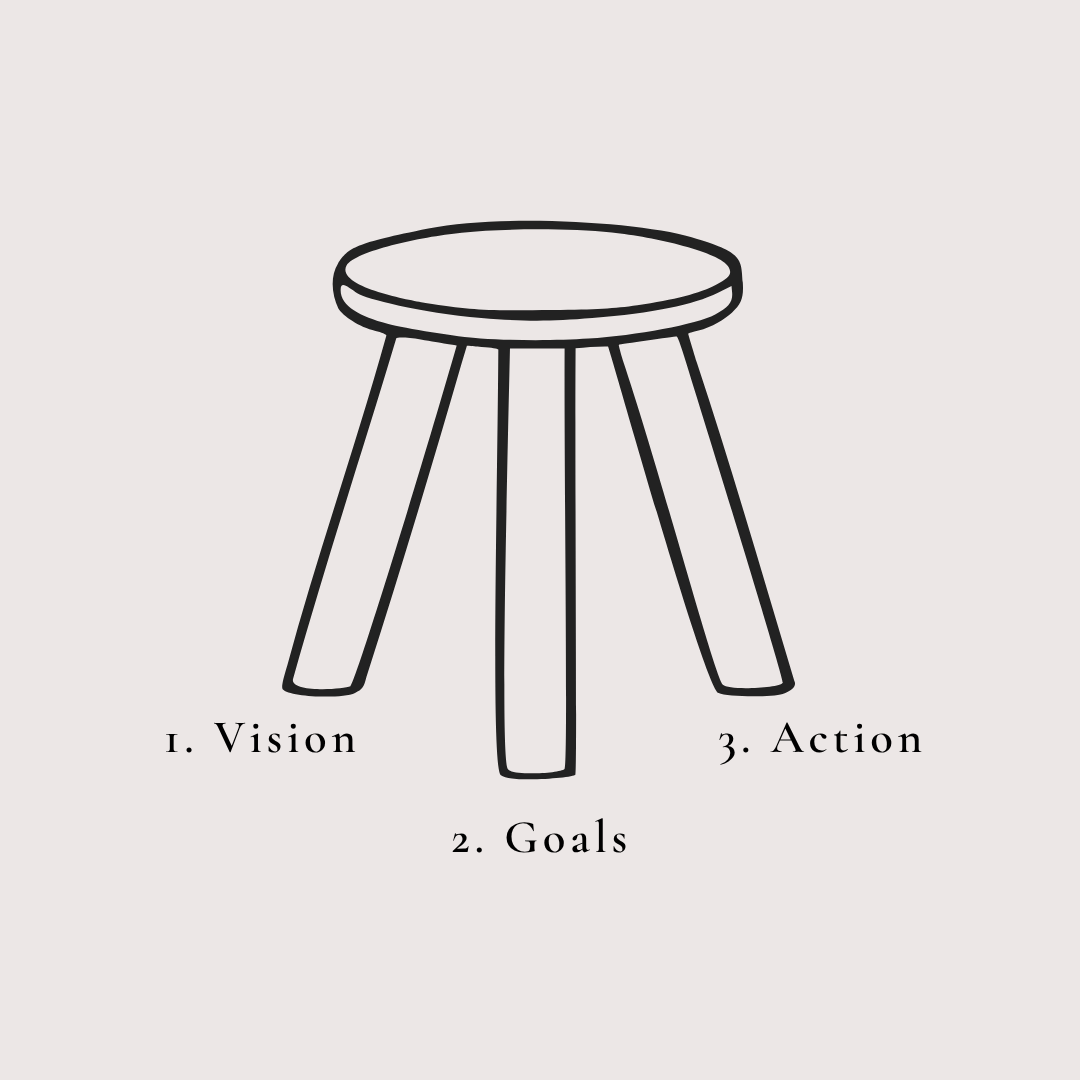
1. Define/revisit your vision & values
This is the most important work of all.
To fill the void left by cutting out your bad habits, first you need to get crystal clear on your core values and create an inspiring vision for your life.
(If you’ve already done this work—simply revisit it.)
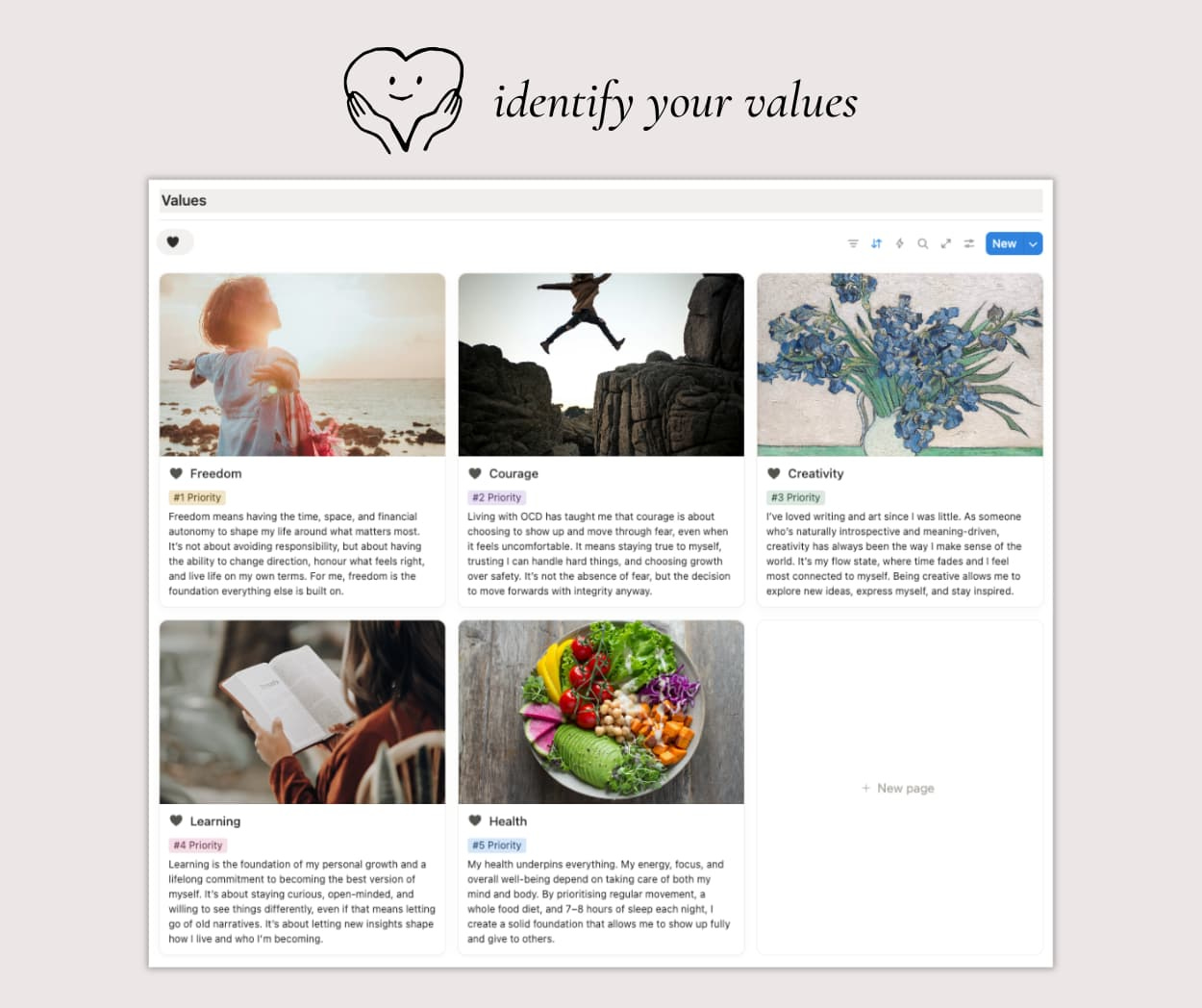
Start by defining 1-5 core values. They should be intensely personal to you and reflect how you want to show up and live your life (not the idea of who everyone else expects you to be). Here’s an example of mine:
Define your vision. Your vision is directly borne out of your values. Dream big. Then dream bigger. You don’t need to have all the answers about how to get there just yet. I like to break this down into three simple prompts:
Your ideal life - what does it look like?
Your mission - what do you want your life to stand for?
Your anti-vision - What do you want to avoid at all costs? What’s the long-term price of staying stuck?
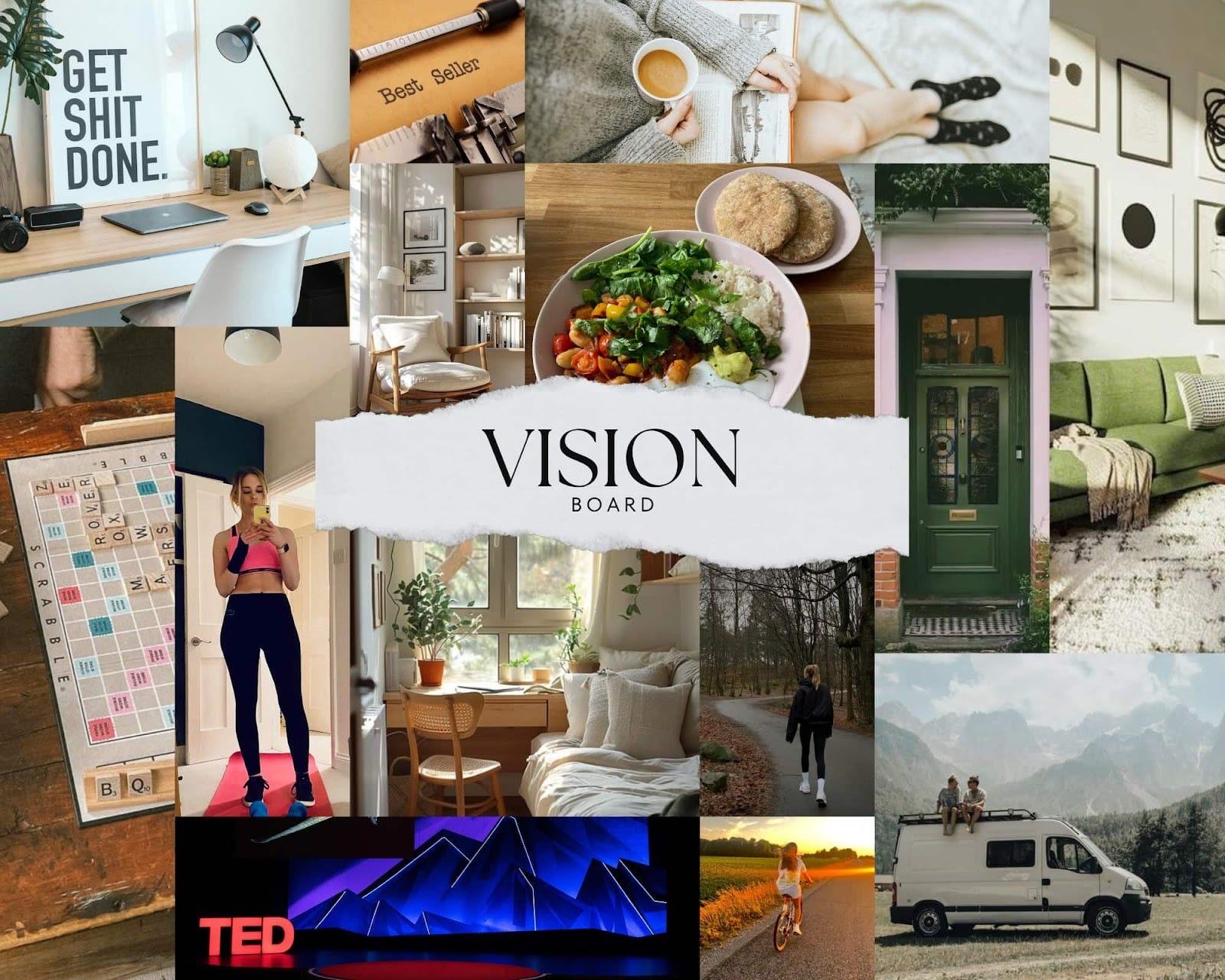
Create a vision board. Treat this as a fun and inspiring mini project. Dedicate a morning or afternoon to it and let your imagination run riot. Your vision board exists to conjure the energy of your dream life (even if you have no idea how any of it will happen). I’ll give you a sneak peek of mine:
Set your dreams. Once you’ve defined your vision and created your vision board, think about what you would LOVE to achieve. Don’t approach this like SMART goal setting—I want these to feel wildly ambitious and optimistic. Some of my own examples might include:
Achieve financial freedom
Build a successful personal brand
Write a bestselling book
Inspire widespread minimalist vegan living
This is your bible.
Write it all down somewhere and make it easy to reference.
We’re going to come onto goal setting and healthy habits, but you can’t expect to do them properly unless you’ve laid solid foundations first.
2. Choose 1-3 meaningful goals
There’s an overwhelming temptation to set loads of goals at this point, inspired by your vision. Be wary of that impulse. It’s great to feel motivated, but I know I’m the first person to bite off far more than I can realistically chew.
For now, I’d advise choosing one meaningful goal.
You may want to choose up to three, but if you’re unsure, stick with one and focus on it fully. Once you’ve achieved it, you can then layer more in.
Some of the most impactful places to start can be:
A health goal
A decluttering goal
A creative goal
A financial goal
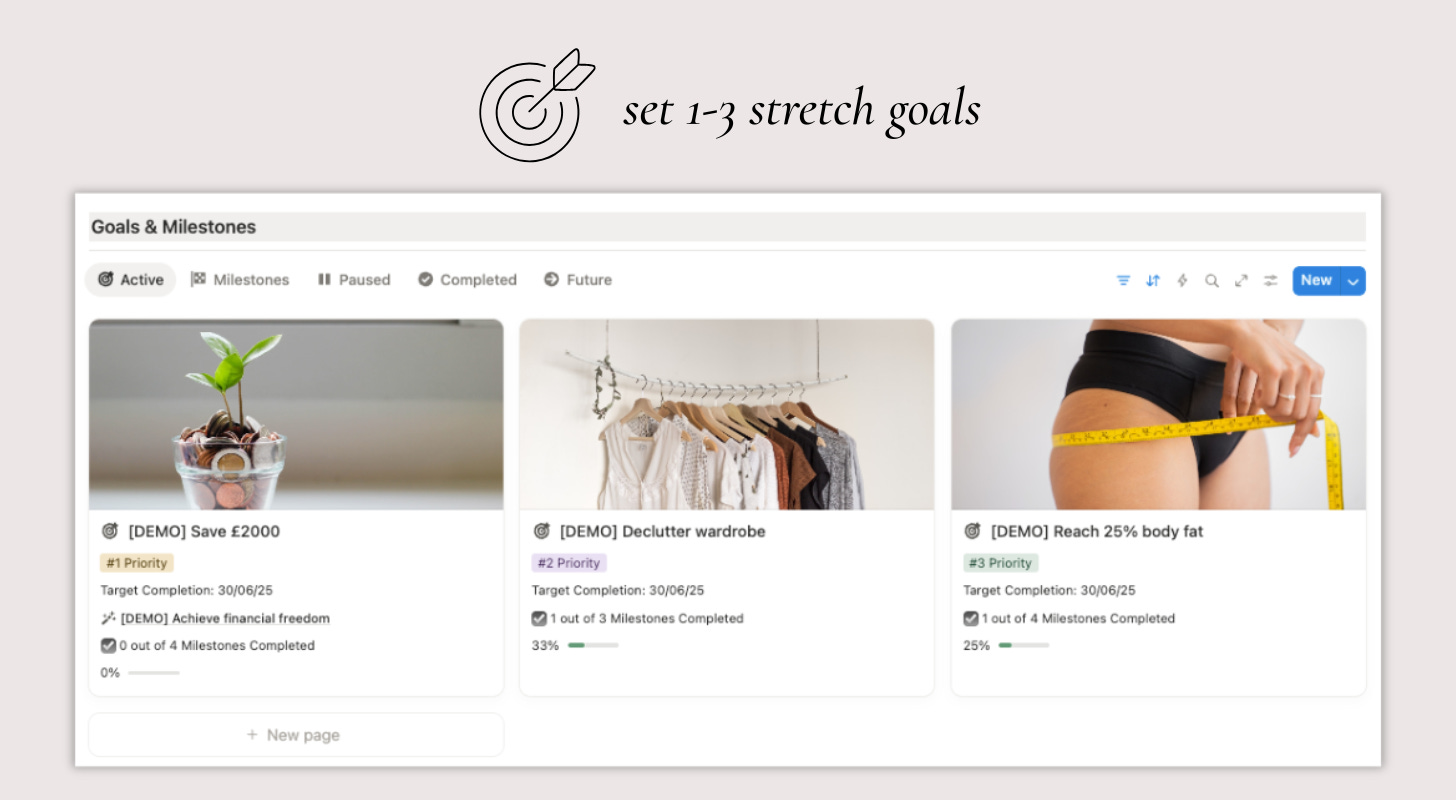
Maybe you want to hit a certain body fat percentage, or do a full audit and declutter of your winter wardrobe.
Or perhaps it could simply be to get your Intentional Life OS up and running by filling in all the dashboards.
A meaningful goal should feel like a passion project—something you can really get your teeth into—so pick something that ties into your vision and values and genuinely excites you.
3. Set 1 needle-moving task a day
A life reset isn’t just about clarifying your vision or setting goals—it must involve action.
Speed is nothing without direction, but once you’ve done the steps above and oriented yourself to where you’re going, you can start to move quickly. You need to start trusting yourself again—for your reliability, for your ability to execute on your plans.
The reason you got into this rut in the first place is because you stopped trusting yourself. You let your own word slip. You promised yourself you’d do things… and you let them slide.
So every morning, ask yourself: what is the ONE thing that, if nothing else gets done, absolutely NEEDS to get done?
It is such an underrated habit.
Often, we have so many things on our mental to-do lists that we end up feeling overwhelmed and achieving none of them. Or at least we procrastinate on the big things while doing a little bit of everything… which translates into a whole lot of nothing.
So I want you to strip everything back to basics and really think critically each day about your priority task.
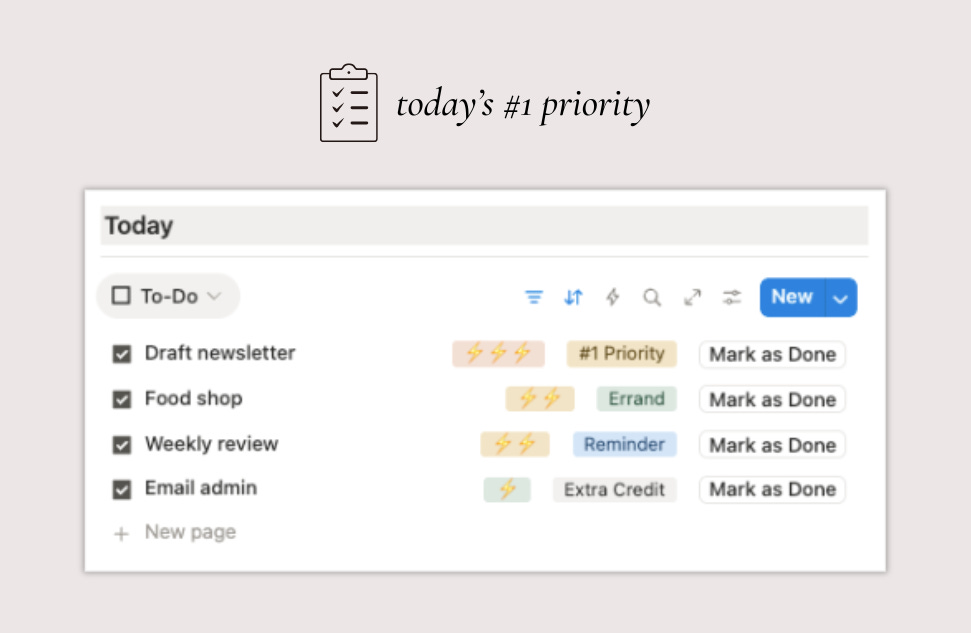
Once you get into the habit of achieving that one thing, the momentum you build is incredible. You can then start setting 1–3 priority tasks a day (but never more than that). Everything else is a nice bonus.
By taking consistent action, you become more decisive and move more purposefully through your days.
3. The holy trifecta
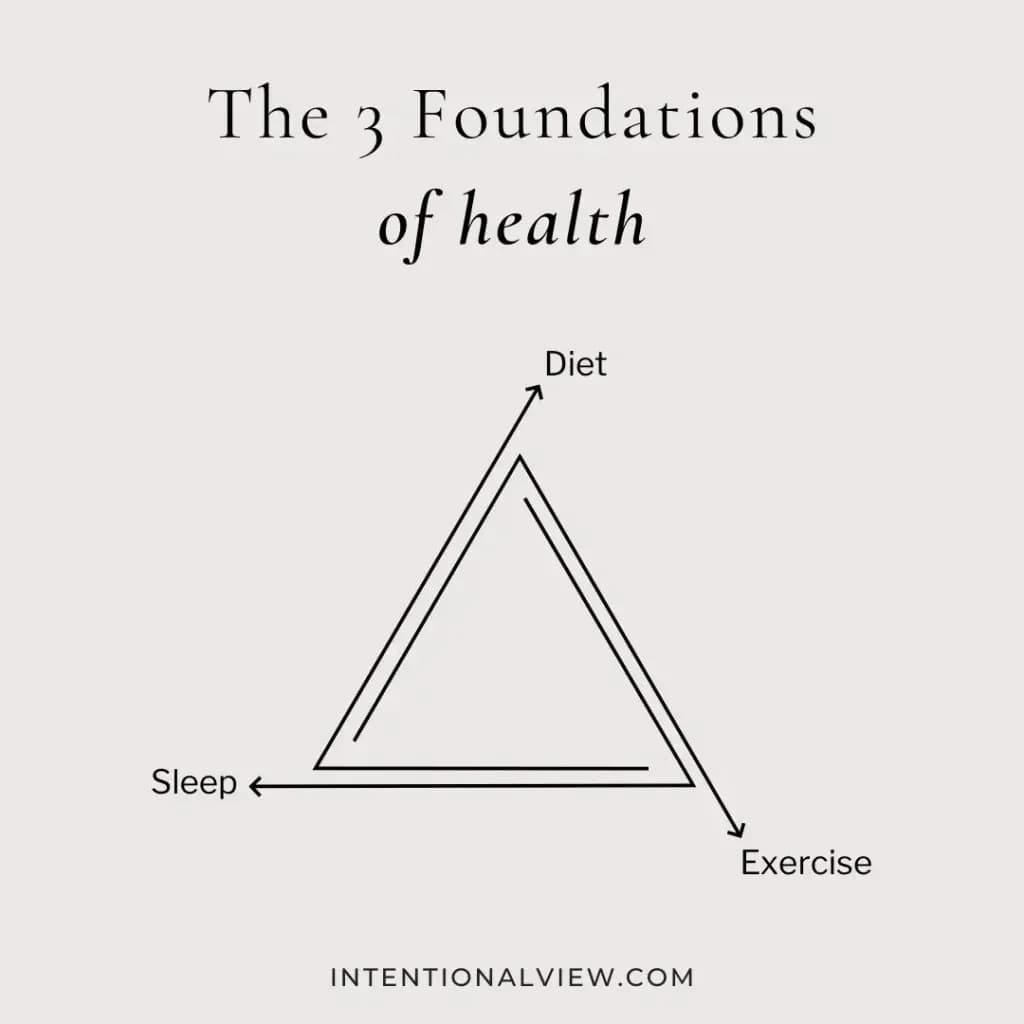
1. Walk an hour a day
Exercise is important—for your body and your mind. No one’s disputing that.
So why don’t we prioritise it if it’s so obvious?
Because it’s hard. And because we default to comfort.
If you’re starting from zero, I’m not going to tell you to build a gym habit here. If you want to layer in strength training a couple of times a week, go for it.
The problem is, we all tend to overcomplicate exercise.
Because we don’t achieve it perfectly in our mind’s eye—sweating it out in a spin class or crushing a full hour at the gym—we end up doing nothing at all.
So let’s lower the mental resistance.
Exercise is as simple as moving your body. And you know what’s free and seriously underrated?
Walking.
Why start with walking?
It’s gentle on your body—you’re unlikely to injure yourself.
It’s great for burning fat because it increases NEAT (Non-Exercise Activity Thermogenesis).
It doesn’t leave you starving like traditional cardio, so you’re less likely to undo all your hard work with extra calories.
It’s amazing for your mind. Some of my best ideas come when I’m out walking. It’s a chance to be alone, tap into your creativity, or just have some mental processing time. Listen to a podcast, your favourite music, or simply be with your thoughts.
Walking outside is lovely, especially at this time of year when the leaves are turning. But when it starts to get cold, dark, and wet, consider investing in a walking pad (I use one like this—it’s nothing fancy, but paired with a standing desk, the time flies).
Aim for an hour a day.
It doesn’t need to be a hike that leaves you gasping for breath. Just get into the habit of daily movement.
The typical advice of 10K steps has actually been proven recently to be pretty arbitrary—6–7K is often plenty to see long-term health benefits and longevity (and to make it nice and simple, that’s give or take an hour).
If you have a smart watch or carry your phone on you, you can track the number of steps you do a day. But try to just enjoy it as your daily you-time.
2. Eat mostly whole plant foods
I know this can be a big ask if you’re not used to it.
But refer back to point #1. Sugary, convenient, and ultra-processed foods are quietly driving the world’s deadliest chronic diseases: heart disease, diabetes, and certain cancers.
The food you eat doesn’t just prevent illness; it fuels your energy, focus, and ability to thrive in every other area of life.
If your outputs are sluggish and lethargic, look to your inputs and ask yourself what needs to change.
I could write a whole post about what I eat following a whole food, plant-based diet (actually, I already did), as well as why you should care about veganism from an ethical standpoint.
But I’ll keep it simply focused on diet here.
A great starting point is Dr. Michael Greger’s book How Not to Die and his free Daily Dozen app, which breaks down the key plant food groups to aim for each day.
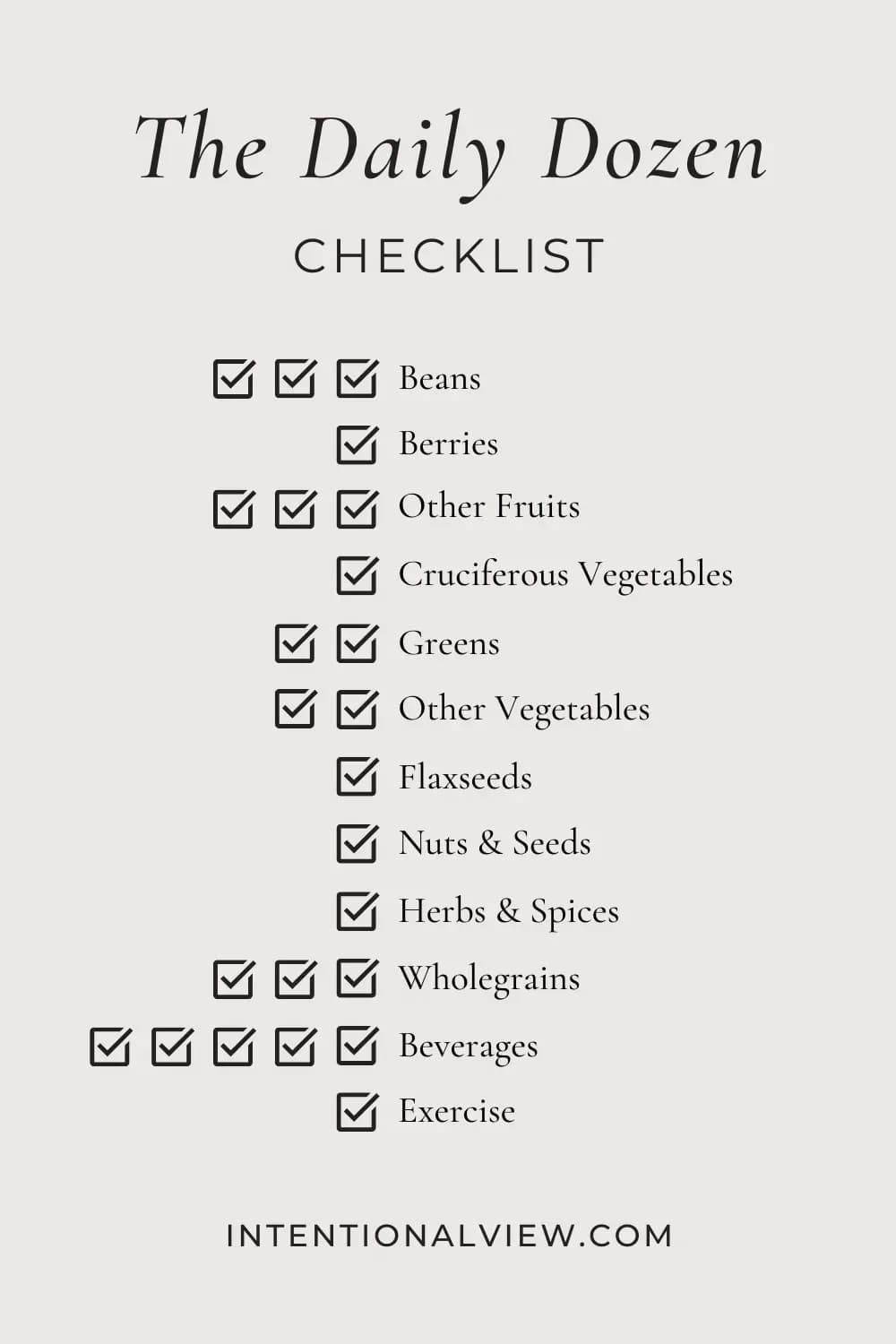
If in doubt, move away from highly processed, packaged products and back to foods that look like they do in nature—fruits, vegetables, grains, legumes, nuts, and seeds.
Get into the habit of batch-cooking a few meals at the start of each week so you’ve always got nourishing options ready, especially on busy days.
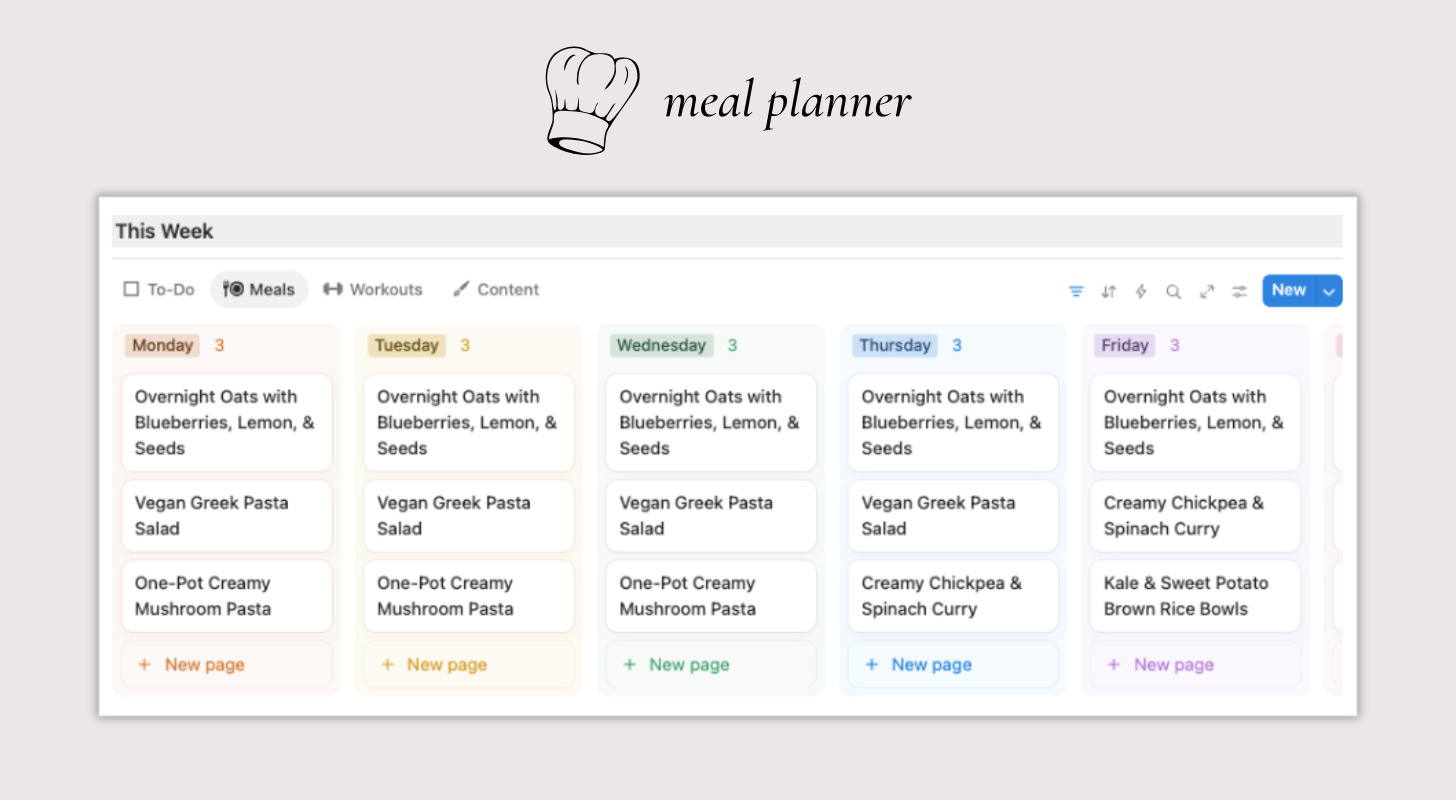
And notice I said “mostly” whole plant foods. Like exercise, it’s easy to get caught up in everything you’re doing wrong if you eat one chocolate bar or have a cheat meal.
Don’t sweat the small stuff.
If you can wean yourself off the standard Western diet for 30 days, you’ll be amazed at how much your tastebuds start to change—and the difference you feel in yourself.
3. Get consistent sleep
“When sleep is abundant, minds flourish. When it is deficient, they don’t.”
—Matthew Walker, author of Why We Sleep
There’s still a lot we don’t know about sleep, but all the major studies point to the same thing: sleep is critical.
It may even be more important than diet and exercise.
Sleep matters because it gives your brain and body a proper reset. It sharpens your focus, boosts your energy, and even protects you from disease.
Suffice it to say, make sure you’re getting enough.
Go to bed and get up at the same time each day—no excuses. Stick to a consistent routine because your body loves routine.
If your sleep patterns are all over the place, here are some things you can do to make it easier:
Set a daily wind-down reminder on your phone an hour before bed. Set a second reminder for lights out.
Create a calming evening routine. I love a cup of herbal tea and a book—it sends me straight to sleep.
Get everything out of your head (we’ll talk more about daily reflection shortly).
Invest in blackout curtains.
Try soft meditation music (my go-to: “Alexa, play meditation music on Spotify.”)
4. Set the stage
We need to talk about your physical environment because it’s a mirror to your inner environment.
When you’re performing a life reset, your surroundings should support the person you’re becoming—not hold you back.
Declutter high-impact zones first—desk, wardrobe, kitchen countertops, bedside table.
Organise around how you actually live—not how you wish you lived (important distinction!).
Do a deep clean as a symbolic reset—physical order creates mental order.
Often we underestimate the power of our environment. We internalise our struggles and assume it’s all about self-discipline.
But once you start hacking your environmental cues, you realise how much easier you can make things for yourself.
If you’re unsure where to start, just focus on one area and reset that space.
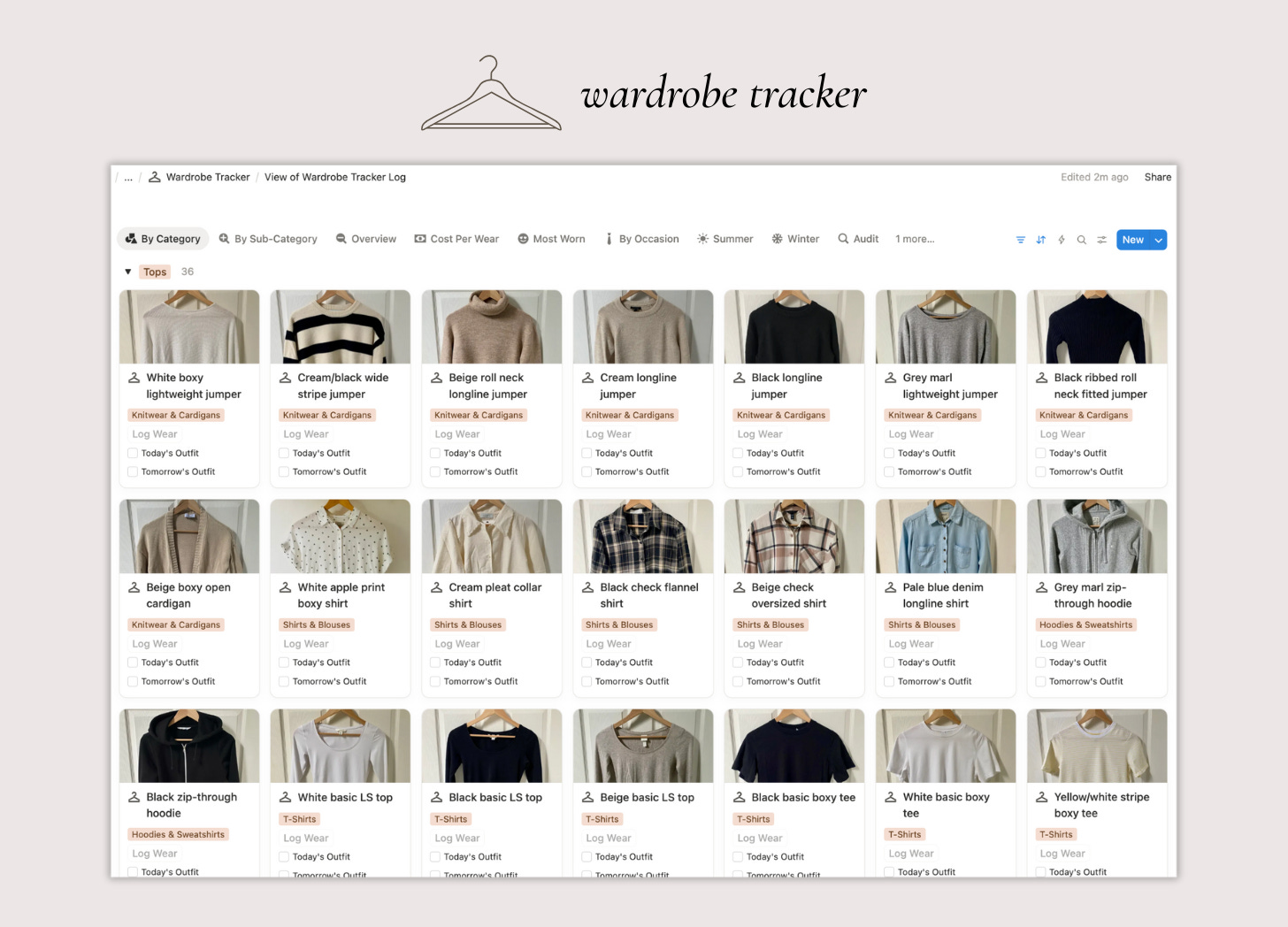
For me, that’s typically my wardrobe. Is it cluttered? Does it feel like it needs attention?
Do a full wardrobe audit: make piles to keep, donate, sell, or recycle. When you’re left with a clear view of what you own, you instantly feel lighter, more in control, and ready to show up as the version of yourself you want to be.
5. Reflect + review
1. Track 1-5 high leverage daily habits
When you think about it, we are what we do on a daily basis.
Our lives are essentially the sum of our habits.
In fact, once we reach the age of 25, our brains become less elastic than in childhood and start to solidify, meaning much of our behaviour—a lot more than we realise—is actually rooted in habit rather than free will.
The brain is constantly looking for ways to conserve energy, which is why it can feel so hard to break old habits and start new ones.
The good news is that neuroplasticity—the study of the brain—shows that change is possible.
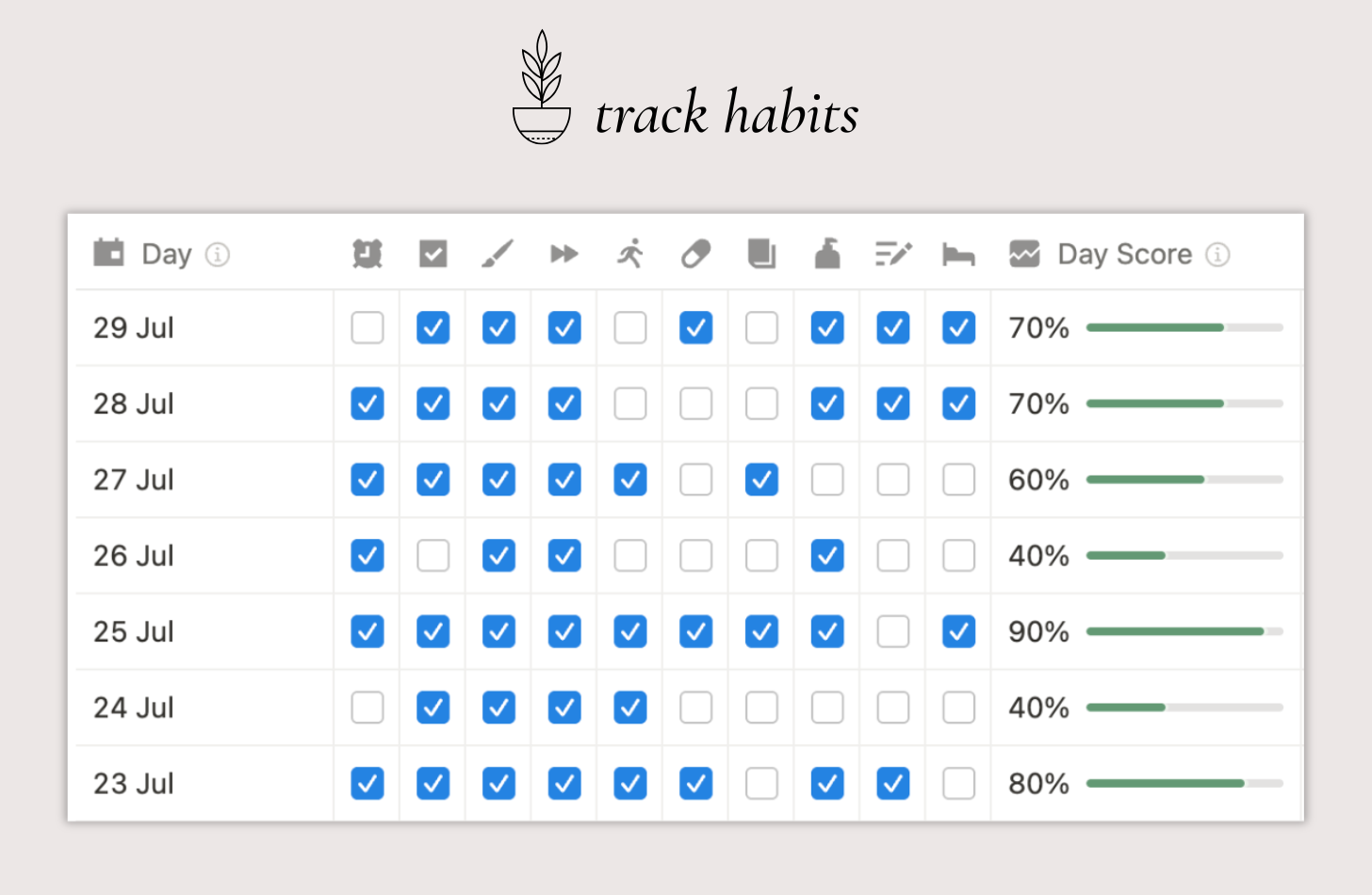
The reason I encourage tracking healthy habits is simple: it taps into your brain’s natural dopamine/reward system. You’re using your brain’s own wiring to your advantage.
Plus, there’s the old truism: what gets measured, gets managed.
Tips for building habits:
To start, make them so ridiculously small you can’t fail.
Don’t introduce too many at once. Your brain will not thank you.
Use habit stacking—link new healthy habits to existing ones.
Start with a few of the simple cornerstone habits we’ve already discussed that have ripple effects across the rest of your life, for example:
Get up on alarm
Walk
Journal
Go to bed on time
2. 5-minute morning + evening reflection
Reflection is a meta-process that allows you to become more aware of who you are, what you do, and why you do it.
Documenting your experiences through this 30-day reset will give you a ton of insight into yourself.
If you don’t give yourself this time, things get buried beneath the surface and you end up back where you started—rushing through life with no handle on things.
I’ll be honest: most journaling practices fail because they just involve staring at a blank page and free writing.
That definitely has its place at times, but in my experience, keeping things short and structured is the only realistic way to maintain this as a daily habit.
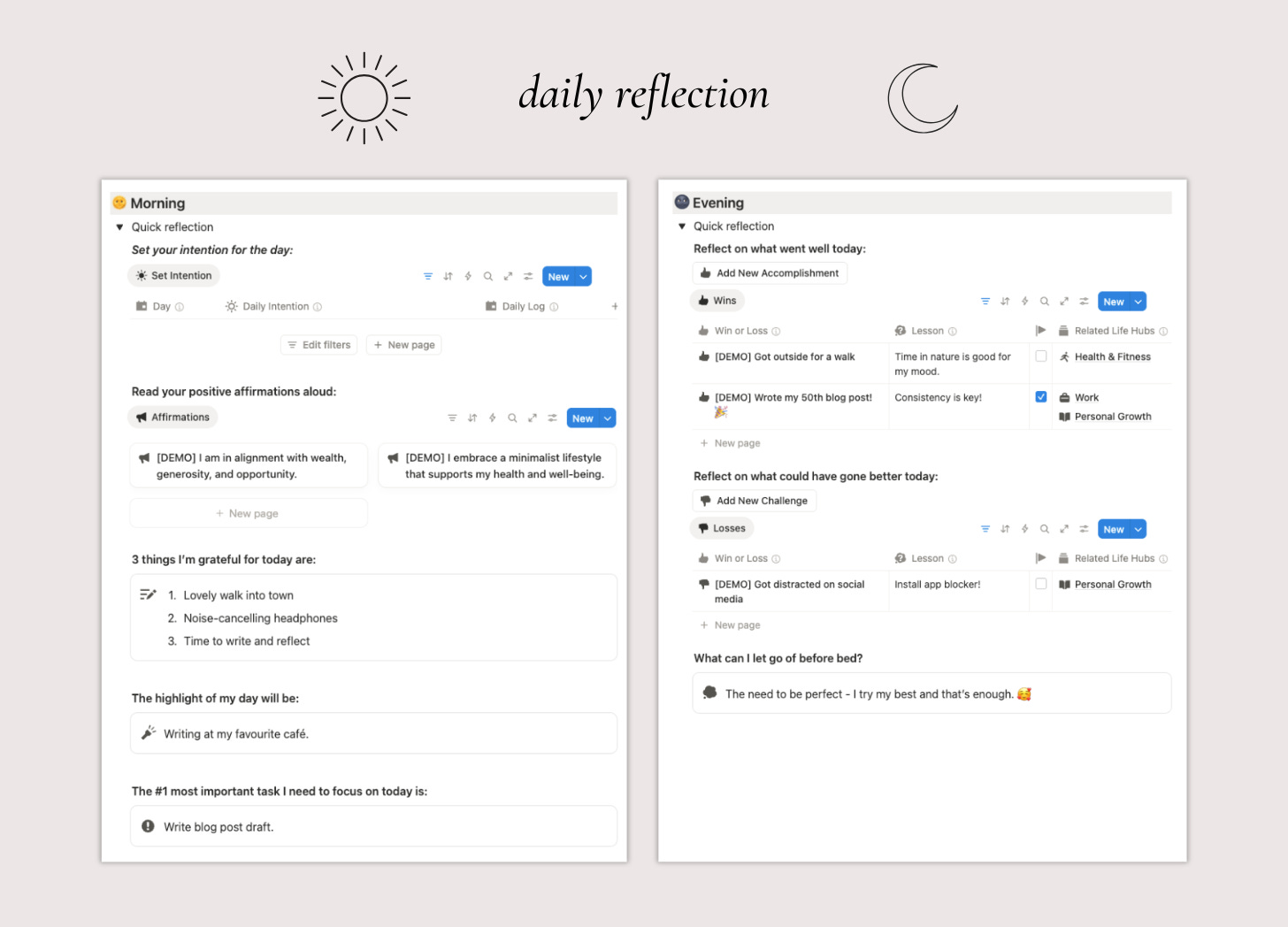
That’s why I built an auto-repeating daily reflection practice into my Intentional Life OS, with quick morning and evening reflection prompts.
If you just want to steal the basic framework:
Morning:
Set your intention
Log 3 things you’re grateful for
Pick your highlight for the day
Identify your #1 priority/THE GOAL
Evening:
Celebrate any wins
Address any challenges/lessons
Brain dump anything you can let go of before sleep
It does not need to be any fancier than this.
I know this was a long post, and I know it sounds like a lot. But if there were an easier, shorter way, everyone would be doing it—and we know that’s not the case.
To clarify:
Get rid of instant gratification with a dopamine detox—remove bad habits.
Fill the void with an inspiring vision, translate that into 1 meaningful goal, then take 1 action towards that goal every day.
Look after your inputs—exercise, diet, sleep. Treat your body like a temple.
Bring order to your physical environment. It’s a direct reflection of your internal state.
Stay self-aware throughout the process—track high-leverage habits and adjust course as you go. Set aside 5 minutes morning and evening to check in with yourself.
Remember: you actually have to want this and be willing to put the work in. Whenever you feel stuck, refer back to your anti-vision—reminding yourself what you absolutely don’t want is often as powerful as reminding yourself what you do.
If you stick to these steps, you can’t help but feel the difference. I hope it helps.
👉 Get 40% off the Intentional Life OS

Saved for now. Will sit and go through it in silence & come back to drop a comment. Looking forward to reading it! Just wanted to drop a comment and let you know that, Sophie❤️