
I Took a Workshop in Intentional Life Design
Here's what I learned

This post may contain affiliate links, which means I may earn a small commission if you make a purchase (at no extra cost to you).
When I first discovered intentional life design a couple of years ago through Bill Burnett and Dave Evans’ book Designing Your Life, it struck a deep chord.
Since then, I’ve become a bit obsessed with the topic! I truly believe it’s something that should be taught far more widely—starting in schools.
In my experience, you can be an A* student in traditional subjects like French or Geography, but still feel totally lost when it comes to understanding what you want to do with your one precious life.
So, when I came across a 3-part workshop on intentional life design, I knew I had to sign up.
Here’s what I learned.
What Is Intentional Life Design?
Intentional life design is a practice of self-reflection and visioning that puts you in the driver’s seat of your life. It’s about uncovering what truly brings you joy, meaning, and fulfilment.
Instead of simply reacting to life’s demands, intentional life design empowers you to become the architect of your own journey, creating a roadmap based on your own unique values, passions, and aspirations.
This approach goes beyond traditional self-help or career planning. It digs into those big, sometimes daunting questions we often avoid or lose sight of:
What is my purpose?
How can I create a life I genuinely love?
What impact do I want to have on the world and those around me?
The act of attempting to answer these questions is, at its heart, a commitment to take yourself and your life seriously.
In my view, there’s no worthier pursuit.
About the Course
I first “met” Chris Palmer through my blog, and when I saw he was offering a mini-course, Design Your Life for Meaning and Success, I was instantly intrigued.
Despite the workshops running from 11pm to 12:30am UK time—WAY past my bedtime!—I knew it would be worth the late nights.
The course has an interesting backstory.
While teaching filmmaking at American University, Chris introduced a module on intentional life design to help students explore their purpose and direction. It quickly became so popular that it turned into a permanent fixture in the curriculum.
Although Chris no longer teaches at AU, he continues to run this free, three-part online course each year via Zoom, generously sponsored by the Sibley Senior Association.
For me, even as someone who regularly writes about intentional living, this course was the perfect refresher.
As part of the homework, refining my Personal Mission Statement helped me refocus on the things I truly want to keep front and centre, and was exactly what I needed to reconnect with those core intentional living principles.
The Three Legs of a Stool
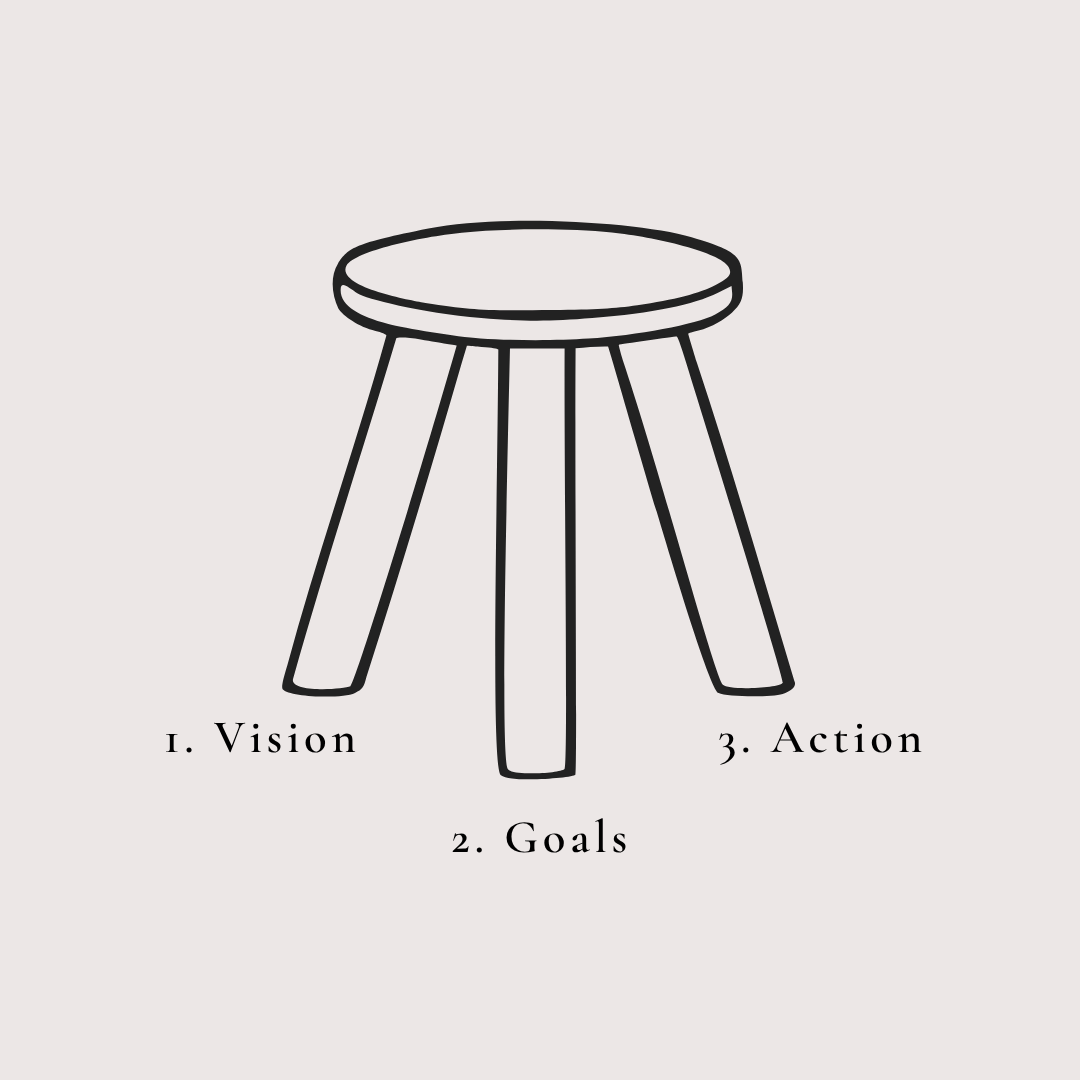
We kicked off the course with a powerful analogy: a three-legged stool representing vision, goals, and action. Just as a stool needs all three legs to stand, a fulfilling life requires all three to feel balanced and complete.
Vision – The “Why” of Life
Vision is our purpose, the “why” behind everything we do. It’s often captured in a personal mission statement – a guiding star that clarifies what we truly want in life and inspires us to move forward.Goals – The “What” of Life
Goals translate our vision into specific, achievable milestones. They give direction, marking our progress and building momentum. Goals are the “what” we aim for in our journey.Action – The “How” of Life
Action is where vision and goals come to life. Without consistent effort, even the best visions and goals remain dreams. Action requires commitment, resilience, and courage to make meaningful progress.
Each of these elements was explored through a dedicated workshop in the course:
Workshop 1: Capture your vision in a personal mission statement
Workshop 2: Set clear, purposeful goals aligned with your vision
Workshop 3: Learn strategies for consistent action to achieve your goals
Guiding Principles for a Life Well-Lived
Chris gave us a 50 point handout filled with absolute GOLD on building an intentional life.
Here are some of the ideas from the class that really stood out to me in particular.
1. Imagine your legacy
Picture this: you’re at your own funeral, listening in as someone delivers your eulogy.
What would you want them to say about the life you led?
Take 60 seconds and imagine the words they’d use.
Reflecting on this can help you define the legacy you hope to leave and the values you want to live by.
2. Set your flight plan
Your personal mission statement is like a flight plan.
Just like a plane may occasionally veer off course due to turbulence or bad weather, we, too, can get sidetracked by distractions or life’s unexpected challenges.
But with a clear mission statement as our guiding plan, we can always make adjustments to get back on track.
It keeps us aligned with our purpose, helping us course-correct so we stay focused on reaching our destination.
3. Fill your jar with the big rocks first
Think of your week as a jar.
To make the most of it, you need to put the “big rocks” in first—these are your most important goals and projects.
The smaller things – like emails, TV, and daily admin – are the pebbles and sand that fill in around the rocks.
If you start by filling your jar with sand, there won’t be room left for what truly matters. So, prioritise the big rocks first to fit everything important into your schedule.
4. Be audacious
Don’t settle for small or easy wins.
Set goals that are audacious.
While they shouldn’t be impossible, your goals should challenge you to grow.
Think of them as stretch goals. For example, if you want to write, why not aim to write a book?
And for those bold ideas that aren’t ready to become goals yet, keep an “Ideas” section at the end of your personal mission statement. Stay in a mode of constant creativity—capture every idea, no matter how wild or crazy!
5. Your ‘future life’ folder
Your head isn’t for storing ideas—it’s for creating!
Writing everything down in a trusted place builds what Tiago Forte calls a “second brain,” freeing up mental space so you can focus on what matters now, knowing your ideas are safely captured for later.
When you write down your goals, they also become more concrete, meaningful, and actionable.
Get specific: what do you want to accomplish? By when? How will you do it, and who can help?
Get a simple folder and fill it with the key documents that inspire and guide you—your personal mission statement, your goals, a favourite poem or quote, anything that speaks to the life you’re building.
Label it with something meaningful, like “My Future Life,” or words that fire you up.
Review it regularly to reconnect with your purpose.
6. The power of routine
The true essence of your life is found in your daily routine.
It’s easy to get swept up in the busyness of life, reacting to whatever comes your way rather than being proactive.
But each day is important—the passage of days is your life, and every day that passes is one less you have to live.
7. Keep your promises
Integrity is about keeping promises—to yourself and others. Every commitment you make, whether it’s a promise or an offer, holds weight.
Take your commitments seriously, even the small ones like saying to yourself you’ll go to the gym, or telling someone you’ll call someone back.
Others depend on you to follow through.
You depend on you to follow through.
Being consistent in your word builds trustworthiness and solidifies your reputation as a person of integrity.
8. Urgent vs important
Don’t let ‘urgent’ matters crowd out what’s truly important.
Daily interruptions, social media rabbit holes, and other people’s issues may feel immediately pressing, but they often distract from meaningful tasks that aren’t urgent but matter most to your goals.
Aim to spend more of your week focusing on these important, non-urgent priorities—they’re what will truly move you forward.
9. Avoid ‘the slows’
During the Civil War, Lincoln famously complained that General George McClellan had “the slows”—hesitating, delaying, and missing critical opportunities.
Don’t fall into this trap!
Move quickly, seize opportunities, and take initiative.
The faster you act, the better you’ll feel, and you’ll build a reputation for speed and reliability.
Take important calls right away, and handle small tasks (anything under two minutes) immediately—this habit is a key to staying productive and keeping momentum.
10. Flow over multitasking
Despite what we’re often told, multitasking isn’t the key to productivity. Constant task-switching creates cognitive waste, draining focus and limiting productivity.
Instead, aim to dedicate 1-2 hours per task to immerse yourself in deep work, following the principle of “flow” introduced by psychologist Mihaly Csikszentmihalyi.
Flow is that optimal state where we’re fully absorbed in an activity, achieving both focus and satisfaction.
11. The importance of saying no
Learning to decline requests is essential for productivity.
Saying no assertively yet graciously is a skill that not only preserves your time but can also strengthen your relationships.
By clearly communicating your boundaries and being honest about what you can commit to, you keep the door open for future opportunities without overextending yourself.
12. Own your part
When things go wrong, resist the urge to blame others. Instead, focus on how your actions may have contributed to the issue.
A better first step is to get into the habit asking yourself, “What did I do to contribute to this breakdown?”
Blaming creates unnecessary stress and tension, while taking responsibility helps you find constructive solutions.
13. Reflect & grow
A personal journal can be a powerful tool for living with purpose and intention.
By regularly reflecting on your actions and thoughts, you become a more skillful observer of yourself and the identity you’re shaping.
Journaling increases self-awareness, helping you recognise how much of your behaviour is automatic rather than intentional. This practice encourages constant improvement and keeps you aligned with the person you aspire to be.
I’ll just finish by saying that Chris is an incredible teacher – full of passion, wisdom, and genuine care for each student.
He runs this course once a year, so if you’re interested in joining the next one, I encourage you to reach out to him via his website or email him directly at christopher.n.palmer@gmail.com.
If you’re eager to dive in right away, Chris explores these ideas and much more in his equally philosophical and practical companion book, Finding Meaning and Success: Living a Fulfilled and Productive Life. All proceeds from the book go toward funding student scholarships at American University.
His most recent book, Achieving a Good Death: A Practical Guide to the End of Life (Bloomsbury, 2024), marks his 10th publication.
Taking this workshop was just the beginning.
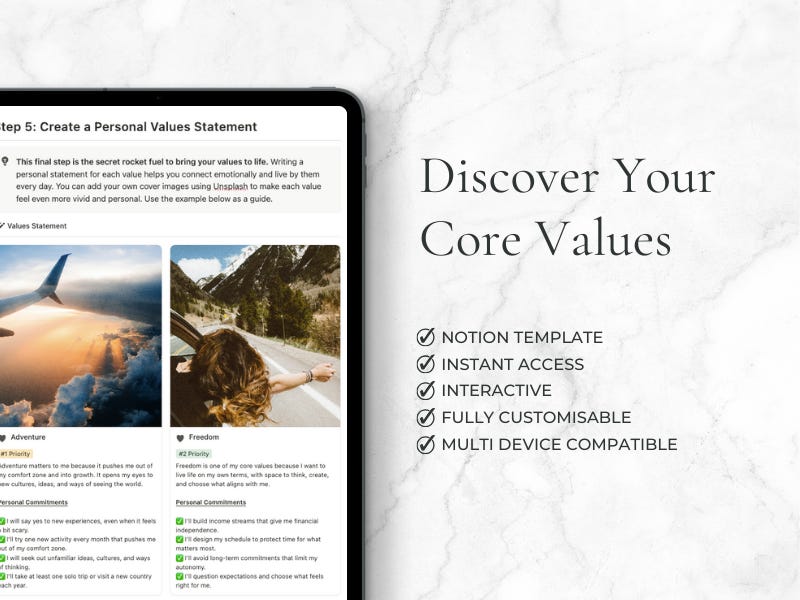
Since then, I’ve developed my own personal framework for intentional life design—and it’s made a huge difference in how I live and make decisions.
If you’re curious to see how it all comes together, you can explore it here.
