
Traditional productivity advice misses the point entirely
Or is it just me?

I used to think my problem was discipline.
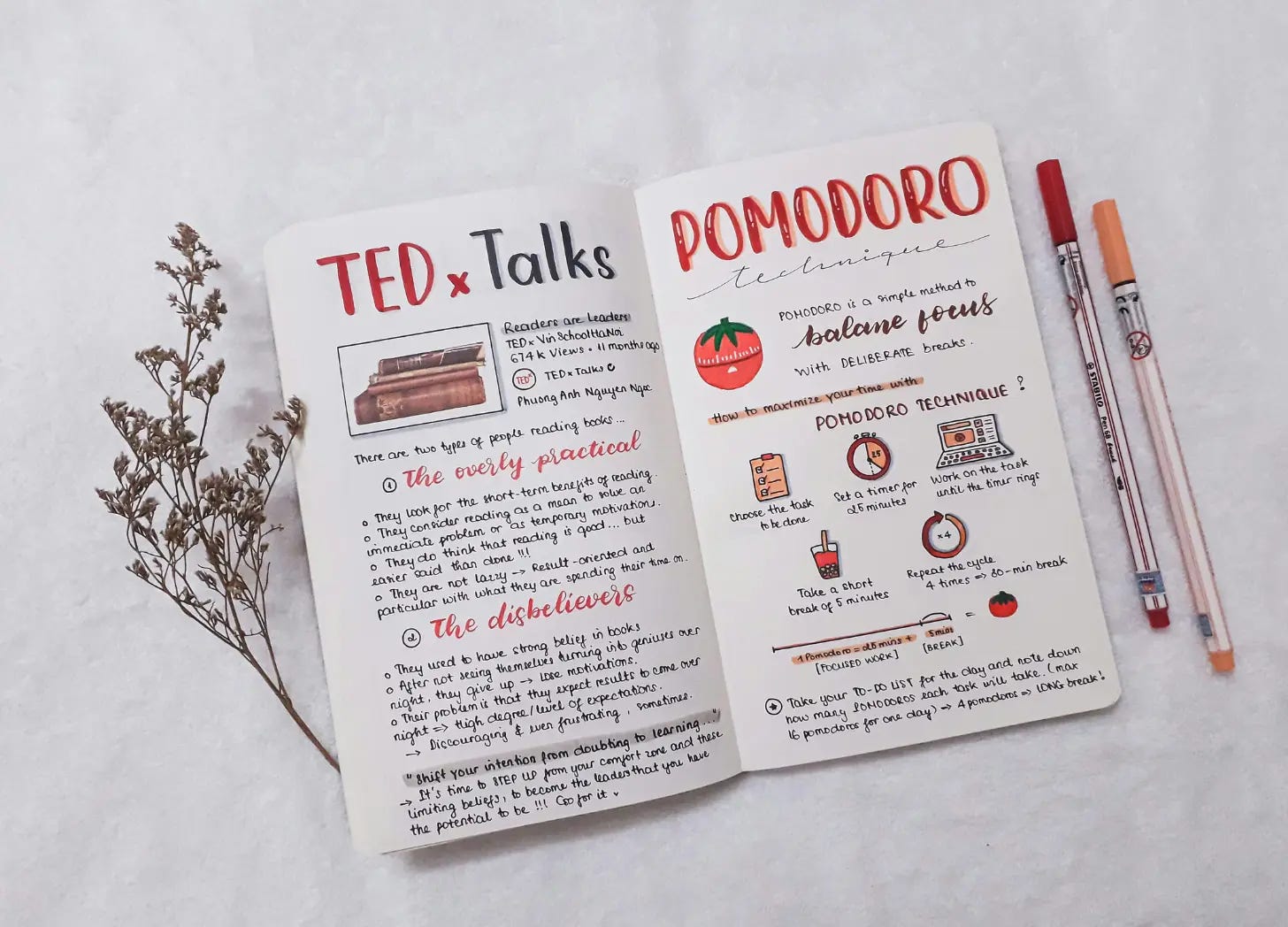
That if I could just stick to a system—any system—I’d finally feel on top of things. So I tried everything: Pomodoro timers, the Eisenhower Matrix, habit stacking, time blocking—the whole alphabet soup of productivity.
And for a week or two, I’d feel amazing. Like I’d cracked the code.
Then inevitably, I’d crash. I’d miss a day, fall behind, and the entire system would collapse.
In other words, I thought I was the problem.
That was until, at the age of 30, my whole life split apart at the seams. I lost my job. My engagement ended. I moved back in with my parents… I felt like I’d failed at everything.
Burned out, frustrated, and running on empty, I realised something crucial: none of the productivity advice I’d been following was solving the real problem. It was all just band-aids over a deeper issue.
No one tells you that the Pomodoro method won’t help if you’re procrastinating out of fear, or that a perfectly colour-coded calendar won’t save you if you’re sprinting through life in the wrong direction.
The best advice I’ve ever received wasn’t about doing more, or faster, or “hacking” my way to success.
Ironically, it came from losing everything, sitting in the rubble, and figuring out what actually mattered to me. And I’m not saying that’s what anyone has to do to learn this btw—but the core lesson I took from it is this:
Give yourself permission to slow down and get clear.
That’s where real productivity starts: not in doing more, but in moving with intention.
1. You should be doing less, not more
Let’s get this straight: doing more doesn’t make you productive.
That’s busywork, not progress.
This is why I always advise working backwards from traditional advice. You can’t get productive until you know what you should even be working on—and why it matters to you in the first place.
Start with the foundational stuff first: your flight plan.
What’s your vision?
What are your values?
Once that’s clear, it trickles down into your goals, projects, tasks, and habits. Everything else flows from there. Without this foundation, you’re just rearranging deck chairs.
Once your flight plan is clear, you can focus on what really matters. Typically, a couple of hours of deep focus on one task that moves the needle will get you further than endless “productivity hacks.”
For me, that’s writing this newsletter. That’s my non-negotiable deep focus work.
This approach also makes it easier to differentiate between high-priority and low-priority tasks. For example, I can be notoriously slow at replying to text messages, and I used to beat myself up about it. Now, I can take ownership with less guilt: today, it just wasn’t a top priority.
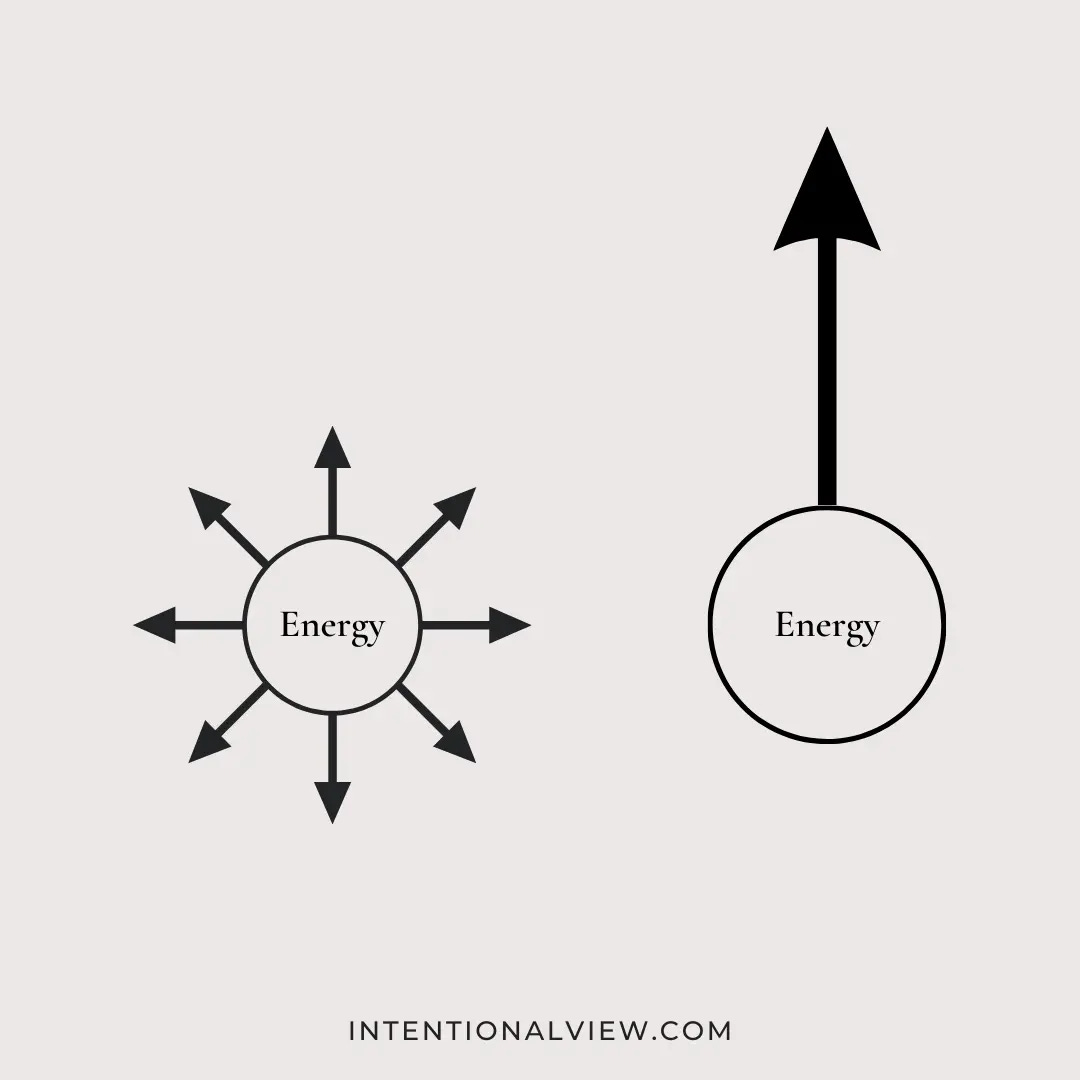
This isn’t just my personal philosophy. Greg McKeown makes the same point beautifully in Essentialism: The Disciplined Pursuit of Less: put all your energy into the few things that truly matter, rather than scattering your focus across dozens of directions.
2. It shouldn’t feel like punishment
Most productivity advice assumes you need to force yourself to grind through tasks. Push harder, stick to the plan, follow the system—no pain, no gain.
How’s that been going for you lately?!
I’m firmly in Ali Abdaal’s camp here. In his book Feel Good Productivity, he argues that the things that actually stick are the ones you find intrinsically enjoyable—and that’s exactly what I’ve discovered in my own life. When I enjoy the process, motivation stops being the problem.
You can make almost anything enjoyable if you approach it the right way.
Take healthy eating. I used to think it was a chore—boring, restrictive, a lot of bland salads. Then I got curious. I read books and learned all sorts of things that blew my mind about nutrition.
Cooking with whole, plant-based foods became something I can honestly say I genuinely enjoy. In fact, it’s more painful to me now when I can’t eat healthily. (My partner will attest to this—I’m miserable without my veggies!)
Exercise was the same. I hated it at school and assumed I just wasn’t naturally “sporty.” I’d resigned myself to a life of avoidance.
But now my daily walks are sacred. I get outside, listen to podcasts, and often stumble across some of my best ideas. I realised I don’t have to punish myself with spin classes or intense workouts just because someone told me I should.
Enjoyment isn’t optional. It’s foundational.
When the work itself is something you actually like doing, motivation stops being a struggle—and progress follows naturally.
3. Willpower isn’t the problem, your setup is
Willpower is a fickle friend, and motivation comes and goes.
Real productivity isn’t about forcing yourself—it’s about setting up your life so the right actions happen naturally.
1. Habits
You don’t need motivation to brush your teeth every day. You just do it. That’s the power of habits: when a behaviour becomes automatic, it barely enters your conscious thought.
The same principle applies to productivity. If you can build the right habits, you don’t need willpower—because you’re already doing the right things seamlessly.
In the Intentional Life OS, there’s space to decide what habits you actually want to build, and a daily tracker to tick them off. You can also see your daily averages for the month on a line graph which is SUPER satisfying.
This ties into the “enjoy the process” idea—gamifying habits makes the act itself rewarding, not just the outcome.

2. Environment
Most productivity advice never acknowledges the power of your environment—and it’s huge! The right cues can make following through almost effortless.
Set up your life for how you actually want to live it. Declutter the non-essentials. Make the activities you want to do obvious and easy to start.
Want to read more? Unplug your TV and keep your Kindle where you can reach it.
Want to eat more fruit? Put a fruit bowl on your coffee table.
Want to exercise consistently? Set your workout gear out the night before.
Small environmental tweaks remove friction, so you can spend less energy forcing yourself and more energy actually living the life you want.
4. You can’t ignore your inner demons
A lot of conventional advice assumes the only thing holding you back is laziness or poor planning.
But that’s often not the case.
I realised this when I started blogging. I wasn’t making much progress, and at first I thought I was just being unproductive.
But looking back at #1—you should be doing less, not more—I could clearly see that I wasn’t misaligned. This was my top priority and I truly did want to start creating content online more than anything.
So it had to be something else.
What I discovered was a tangle of underlying fears holding me back:
The fear of being judged.
The fear of putting myself out there.
The fear of failing because I didn’t really know what I was doing.
And to put it bluntly, no timer, app, or method was ever going to solve that.
Traditional productivity advice rarely accounts for what’s going on inside you. Real progress starts with a healthy level of self-awareness—of noticing and working through these internal obstacles.
There’s a lot more that could be said here, but for me, journaling has been essential. It helps me unpack my fears, understand what’s really stopping me, and take action from a place of clarity rather than avoidance.

If you’re looking to create a life that lets you move intentionally—with enjoyment and momentum—you can get 40% off the Intentional Life OS right now. It’s my own system designed to help you organise your life in a way that actually supports what we’ve talked about here:
Move into alignment with your personal vision and values.
Make the process enjoyable.
Put autopilot to work with habit tracking, so the right actions happen naturally.
Set aside 10 minutes for built-in daily reflection to notice internal obstacles, course-correct, and stay aligned.
…and much more!
How about you? What productivity advice do you actually find useful—or wish you’d ignored entirely?
If you enjoyed this post, upgrading to a paid subscription or buying me a virtual coffee is a lovely way to show your support. 🤍